

"Smaller, Smarter, Urban"
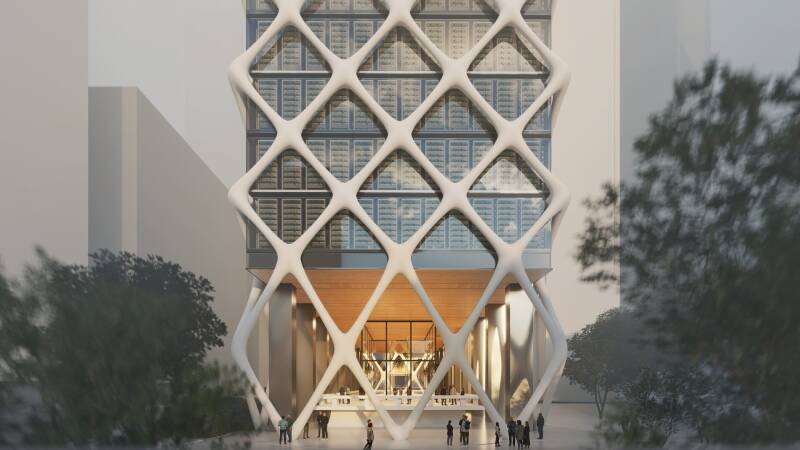
Curtosy of HOK Architecture
Reimagining urban spaces with DataCenterix's "Urban Data Center"
Discover how DataCenterix's Urban Data Center subsidiary is transforming office towers into cutting-edge innovation hubs. We're advancing AI computing, pioneering energy reuse for urban agriculture, and revitalizing downtown districts. Join us in bringing data connection closer to the heart of innovation.
DataCenterix's Urban Data Center proximity to other data centers reduces performance risks for distributed workloads. Urban areas offer advantages such as higher concentrations of end users and enterprises, which align facilities with demand and can improve performance for latency-sensitive services. Urban cores and established corridors also tend to have high-performing network infrastructure thanks to long-standing investment, dense interconnection, and practiced utility coordination.
We have the specialized expertise to uncover hidden potential in real estate assets—value that isn’t immediately apparent through conventional analysis. While others overlook unconventional or underutilized properties, we identify unique opportunities to transform them into high-performance digital infrastructure. Specifically, our Urban Data Center (Edge) solutions can unlock significant value in your underperforming real estate located in dense urban areas. By repurposing these spaces into edge computing hubs, you benefit from lower latency, reduced data transport costs, and increased demand from 5G, IoT, and smart city applications. This approach not only generates new, recurring revenue streams but also boosts overall asset valuation—turning overlooked urban properties into critical pillars of the modern data economy.
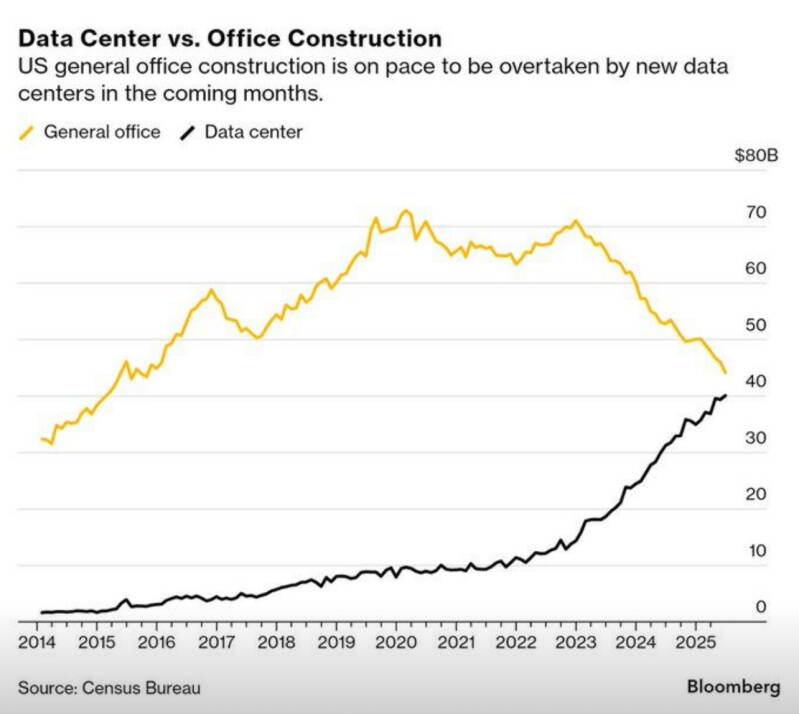
Data centers are officially outpacing office construction
For years, office space was the crown jewel of real estate development.
But now, with demand for AI and cloud services skyrocketing, data center construction is leading the charge. In fact, we’re on track to see data center projects surpass general office construction in the coming months.
The numbers are staggering:
→ Demand for AI-driven data center capacity is growing at 39% CAGR.
→ By 2030, global data center demand is expected to more than triple.
This is shaping the future of how we process, store, and access data. The future is powered by data, and the infrastructure to support it is evolving faster than ever.
From energy consumption to community concerns around sustainability, we need to rethink how we build, scale, and manage this growth.
If you’re keeping an eye on these shifts and wondering how they impact your business, let’s connect.

The future of urban data
DataCenterix's Urban Data Center subsidiary is at the forefront of innovation, transforming traditional office towers into next-generation hubs. These centres are designed to advance AI computing, reuse energy for urban agriculture, and inject new vibrancy into downtown office districts. We're bridging the gap between data and direct access, helping to alleviate the latency often associated with larger, regional cloud-based data centres. Imagine data connections literally within arm’s reach of the programmers, data scientists, and computer engineers who are spearheading today’s advanced technology, much like the solutions recently introduced by Nvidia.
The DataCenterix's Urban Data Center development goal is to help data centers blend seamlessly with their surroundings and create more visually appealing structures that are aesthetically pleasing. This relatively low-cost effort, from an overall development perspective, goes a surprisingly long way in improving public perception.
Also addressing noise pollution is also a top priority. Significant emphasis is now placed on developing and implementing quieter fan technologies within cooling systems, as well as specialized noise containment solutions like screening systems or acoustic panels, especially when facilities are near residential areas. Microsoft, for example, has implemented a number of noise mitigation strategies, including noise walls, buffers, mufflers and more.

Attracting innovation to your property
The evolving landscape of commercial real estate in urban centres presents unparalleled opportunities for office building owners. By integrating data centre capabilities and prioritizing sustainability, you can adapt to the changing demands of the tech industry. Our forward-thinking approach not only meets the needs of AI-focused industries but also contributes to the revitalization of urban cores, creating dynamic, technology-driven work environments. Enhance the value and functionality of your properties with DataCenterix.

Unlocking the power of on-site data
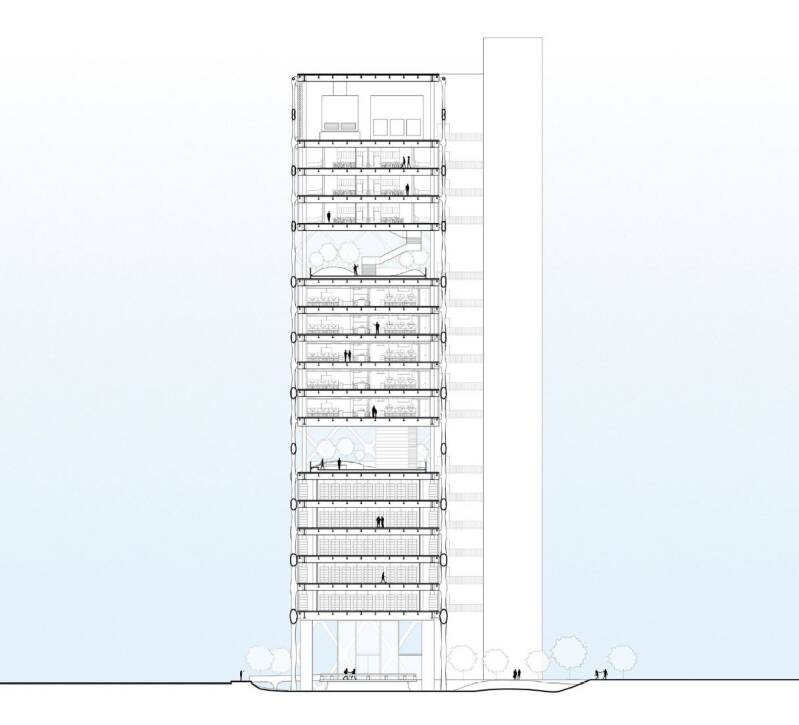
Our urban data centres, strategically located within urban cores, significantly reduce latency by bringing data connection closer to end-users. This direct access provides programmers, data scientists, and computer engineers with faster connections and greater customization than ever before. We utilize direct liquid cooling (DLC) servers, which require only a third of the space of traditional air-cooled data centres. These compact, efficient servers can easily be integrated into high-rise towers, replacing the need for sprawling warehouse-type facilities.
A key advantage of DLC servers is their ability to generate significant amounts of heat efficiently. This raises an intriguing question: could this heat be repurposed for other uses, such as supporting hydroponic farming or other sustainable urban initiatives? We are actively exploring these innovative possibilities to maximize efficiency and benefit our communities.
A New Office Leasing Strategy
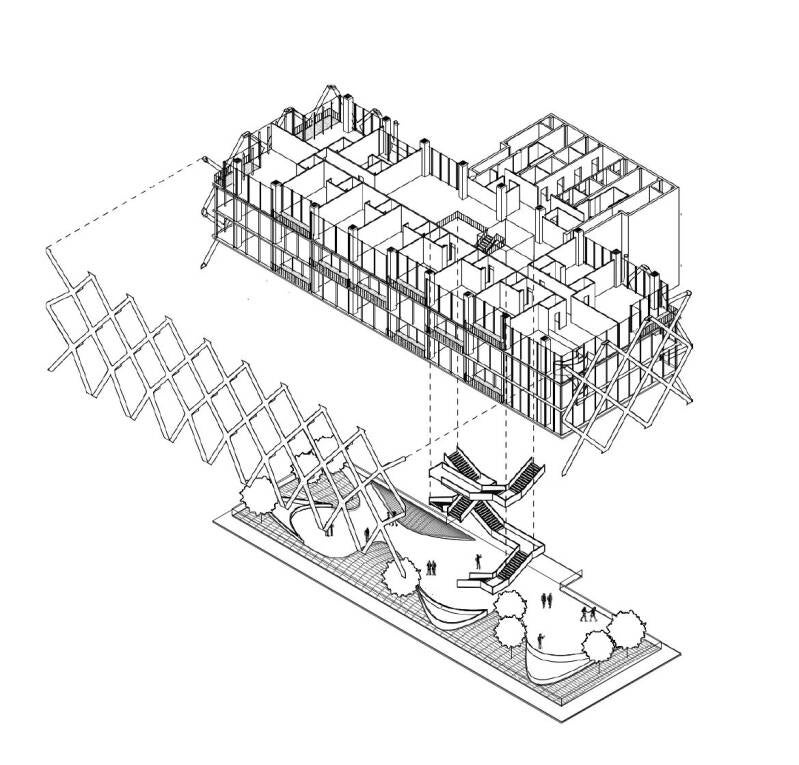
Most existing office buildings feature expansive floorplates intended to house a single client per floor (and often a single client over multiple floors). While this design worked for much of the past, today’s office tenants are looking for smaller floorplates with greater flexibility and more work setting options.
In addition to bringing data centers and agriculture into the building, owners might also reimagine the way they lease and fit out workplace units. Office leases could come with access to (or ownership of) certain servers within the on-site data center.
Tenants also could choose between a combination of traditional office space or live-work units. Inspired by the small apartment-like “officetels” in Asia and designed to appeal to startups, live-work units could include private kitchens and restrooms and multiple configurations in size and layout. Tenants in the live-work units also could have use of servers in the data centers.
A cutout skygarden (right) linking the live-work units with the office floors could create a dynamic space for tenant collaboration, socialization and well-being.
The Key Factors Driving Data Center Site Selection in Smart Cities
1. Proximity to Real-Time Data Processing Needs
Smart cities rely on instant data analytics to optimize traffic flow, emergency response, and public utilities. Data centers must be closer to urban centers to process this data efficiently. This has led to the rise of edge data centers, which minimize latency and improve response times.
2. Energy Efficiency and Green Initiatives
Sustainability is a top priority for smart cities, pushing data centers to adopt renewable energy, liquid cooling, and AI-powered power management. Cities with solar, wind, and hydroelectric infrastructure are becoming prime locations for carbon-neutral data centers.
3. Connectivity and 5G Expansion
5G networks are critical for smart cities, enabling autonomous transportation, IoT communication, and AI automation. Cities with high-speed fiber networks and dense 5G infrastructure are ideal for next-generation data centers, ensuring ultra-low latency connections.
4. Security and Compliance Regulations
Data privacy regulations, such as GDPR and CCPA, influence where data centers are built. Smart cities require secure data handling, driving demand for facilities that comply with local and international data laws while implementing AI-driven cybersecurity measures.
The Role of Smart Cities in Data Center Growth
1. Edge Computing and Decentralized Infrastructure
Instead of relying on large, centralized data centers, smart cities are adopting edge computing—a network of smaller data centers closer to end-users. This approach enhances real-time AI analytics, traffic monitoring, and emergency response systems.
2. AI-Powered Smart Grid Management
Many smart cities integrate AI-driven energy grids to balance power distribution efficiently. Data centers in these regions can benefit from automated energy scaling, reducing costs and optimizing power use during peak and off-peak hours.
3. Smart Traffic and Autonomous Vehicles
Self-driving cars and AI-driven public transport generate massive data streams requiring instant processing. Data centers built within smart cities help reduce latency, ensuring fast decision-making for autonomous mobility systems.

Key Work Letter Items for Urban Data Centers:
- Power Density & Distribution:
- Maximum Power Per Rack: Define the capability to deliver 10-15 kW or higher per rack, which is standard for edge AI inference, rather than traditional 3-5 kW.
- UPS and Backup Power: Specifications for uninterruptible power supply (UPS) systems and generators to ensure high availability, often requiring rapid-start or modular generators.
- Redundant Feeds: Inclusion of dual, diverse electrical utility feeds for high reliability.
- Cooling & HVAC Infrastructure:
- High-Density Cooling: Installation of specialized computer room air conditioning (CRAC) or computer room air handler (CRAH) units capable of handling high-density heat loads.
- Condenser Placement: Agreement on specific, secured locations for outdoor condensers, particularly if the edge site is a retrofitted commercial building.
- Environmental Controls: Provisions for humidity control and air filtration to maintain proper operating environments.
- Connectivity & Fiber Pathways:
- High-Speed Fiber Access: Provisions for diverse, high-speed fiber entries to meet low-latency requirements.
- Meet-Me Room (MMR): Space allocation for, and construction of, a secure meet-me room to manage connections to multiple carriers.
- Security & Structural Requirements:
- Physical Security: Installation of biometric access systems, fencing, and CCTV, as edge sites are often unmanned or in less secure locations.
- Floor Loading and Racks: Verification that the floor can handle high-density rack loads.
- Noise Dampening: Noise mitigation, especially if the site is in a commercial or suburban zone.
- Site Improvements & Logistics:
- Installation of Specialized Equipment: Approval for installing customized modular data center units or IT enclosures.
- Shipping & Receiving: Dedicated areas for secure, rapid delivery of IT equipment.
- Fire Suppression: Installation of specialized fire detection and suppression systems (e.g., dry pipe or clean agent).
- Operational & Legal Terms:
- Site Access & Maintenance: Extended access hours for technical staff and specific maintenance obligations for specialized equipment.
- Emergency Response: Agreed-upon procedures for emergency access and service interruptions.
- Non-Disclosure: Clauses preventing the signage or identification of the building as a data center to maintain a low profile.
The checklist from DataCentrix for planning and building an urban data center, particularly within a service provider’s central office (CO). We emphasize the need for careful preparation due to the complexity of deploying cloud computing environments at the network edge, driven by SDN/NFV, 5G, and low-latency requirements.
In summary;
1. Location – Assess geographic risks, available square footage, potential for modular or retrofitted space, future growth (3–5 years), existing power/HVAC, multiple network entry points, windowless design for security/climate control, equipment access pathways, and regulatory separation (e.g., firewalls).
2. Power – Ensure sufficient current/future utility capacity, redundant grids and entry points, backup generators (48+ hours runtime), UPS sizing (150% of generator startup time), and rack power requirements (5–10 kW typical, up to 50–60 kW for ultra-high density).
3. Heating & Cooling (HVAC) – Target 70–74°F (21–23°C) with 45–50% humidity, use rack-mounted sensors, implement hot‑aisle/cold‑aisle design, consider raised or slab floors, and adopt free‑cooling or physical barriers to minimize OpEx.
4. Design – Use LED lighting, physical security (biometrics, key cards, customer‑area protection), fire alarms/escapes per local codes, and inert gas fire suppression (avoid water near equipment).
5. Physical Layer Infrastructure – Plan a 3–5 year roadmap supporting multiple upgrades up to 400G, use multimode fiber (e.g., OM5, MPO‑24 connectors) to accommodate duplex/parallel applications, adhere to loss budget parameters, leverage CommScope’s design tools, and consider automated infrastructure management (AIM) for tracking and moves/adds/changes.
Our checklist concludes by noting that not every detail can be covered, and we kindly offer DataCenterix's expertise and our technology architect network for further assistance.
Add comment
Comments