About our expertise
At datacenterlandsites.com, we specialize in navigating the complex landscape of powered land sites. Our commitment to excellence ensures we deliver strategic locations for your data centre or industrial project. Discover how our expertise can accelerate your success.
What Is a Data Center?
A data center is a facility that houses an enterprise’s IT systems in a highly controlled environment. These primarily include servers, storage devices and network equipment. A data center facility aims to are to guarantee maximum system security and performance while executing its technical functions.
These centers typically operate 24 hours a day without interruption. A team of skilled professionals is responsible for monitoring and maintaining the centers. This ensures that they operate smoothly and efficiently.
Why are data centers important to business?
A robust infrastructure is essential to a business’s performance and data security.
This is largely because they are responsible for storing and processing critical data. They
- Ensure that this data is readily available for the appropriate personnel
- Keep the information safe from unauthorized access and theft
Data center infrastructures also allow important functions such as email and resource-sharing to take place.
What do data centers actually do?
They may have several specific tasks according to their owner’s business and industry. However, a standard data center workload includes:
- Processing data
- Storing data
- Facilitating communications
- Managing resources
- Supporting websites and applications
- Facilitating transactions
- Allowing virtual communications, from email to video conferences
What Does a Data Center Look Like?
They can come in a range of shapes and sizes. Traditionally, it is a physical space, such as a room or building, which contains the following components:
ComponentPurposeStorage systemsTo store data, keeping information safe and available.ServersTo process data and respond to requests from within and outside of the IT system.Network infrastructureTo provide connectivity between different components.Power suppliesTo provide energy to the components.Cooling systemsTo maintain the hardware at a low, stable temperature.Security systemsTo protect data from unauthorized access and cyber threats.
Nowadays, data centers can also be virtualized or hybrid. Cloud-based data centers do not rely on, or use a minimum of, physical space or IT hardware.
What types of data center are there?
They can take different forms to suit different business needs. The primary data center types are:
Data center typeWhat does it mean?EnterpriseThe business which uses the center owns and operates it.ColocationA third-party provider owns a facility and rents space and physical infrastructure to multiple clients. This covers:
- Power
- Cooling
- Security
However, in a colocation facility the client owns and is responsible for its own hardware.
Managed servicesA third-party provider supplies space, IT hardware and maintenance services to clients on a rental basis.
This means businesses do not have to invest capital and time in buying and maintaining their own infrastructure.EdgeEdge data centers are smaller and are located closer to end-users. This provides low-latency connectivity for cloud applications and services.CloudA cloud services provider owns and operates the “center”, providing clients with on-demand access to virtualized resources and services.Green data centersThese centers have a strong sustainability focus during their construction and use. This includes:
- Eco-friendly construction materials
- Energy-efficient designs
- Use of renewable energy
Hyperscale data centersThese are extremely large facilities designed to meet the vast computing requirements of major technology or data-forward businesses.
What are the most common data center challenges?
Data centers can be extremely complex structures. Perhaps unsurprisingly, the more complicated the center, the more challenges it can face. Here are some of the most typical data center issues businesses may experience:
Power
Data centers require significant amounts of energy to operate. This means consistent access to high levels of electricity, requiring uninterruptible power supplies. This can be a practical challenge, as well as posing elevated operational costs.
Cooling
Data centers generate vast amounts of heat, especially from their servers. This can lead to overheating of the equipment and the surrounding hardware. Cooling technology is crucial for data centers to maintain a stable temperature and avoid heat-related damage.
Security
Data centers contain a range of sensitive information. Protecting critical or confidential data from cyber threats is a top priority for business. Failure to do so can leave enterprises open to hacking, viruses, phishing and ransomware.
Scaling and modernization
Quantities of stored data continue to grow at an exponential rate. Meanwhile, demand for processing power is rising dramatically in the face of artificial intelligence (AI) and machine learning.
These factors are leaving data centers racing to keep up with their increasingly complex and heavy workload. Scaling can involve increasing the amount of hardware or investing in more powerful assets.
What are data center issues in cloud environments?
Cloud-based IT infrastructures can remove some of the more physical challenges presented by traditional centers. However, this does not mean they are problem-free. The biggest difficulties and concerns for virtual data center include:
- Security: Cloud-based data centers can still be vulnerable to cyberattacks. A recent example is the Oracle Cloud Breach in April 2025.
- Data loss: Cloud environments are not immune to data loss from accidental deletion, misconfigured backups, or provider outages.
- Control: Businesses may struggle with reduced visibility and limited control over infrastructure and data. This is especially true in multi-tenant cloud setups or when using third-party management tools.
- Costs: Cloud services can become unexpectedly expensive due to poor resource management, scaling inefficiencies or hidden fees.
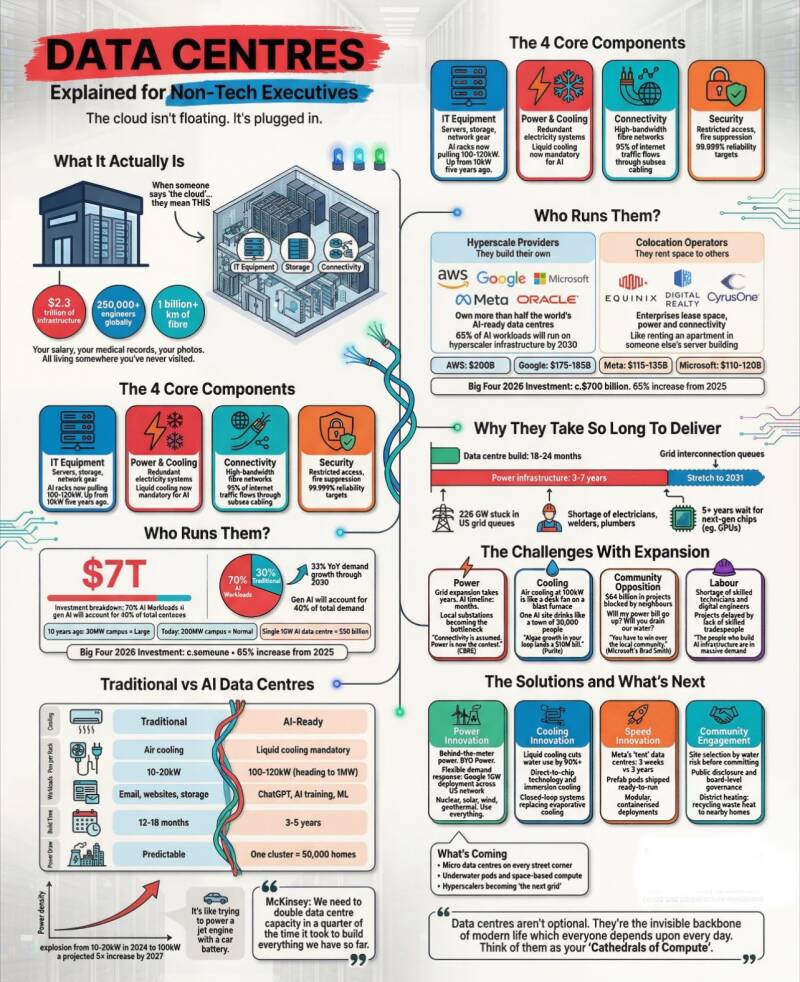
Frequently asked questions (faq)
We understand that securing the right site for your data centre or energy-intensive project comes with many questions. Our dedicated team at datacenterlandsites.com is here to provide clear, actionable answers. Below, you'll find insights into our process, challenges we help you overcome, and how we ensure "speed-to-power" for your development.
What Is Powered Land?
Powered land isn’t just real estate—it’s infrastructure-ready land. These sites come pre-positioned with:
- High-voltage electric interconnection (138kV+ or better 345 kV+)
- Reliable water sources for cooling
- Proximity to natural gas trunklines
- Carrier-grade fiber optic connectivity
- Business-friendly zoning and permitting conditions
In short, they are development-ready zones engineered for fast, large-scale deployment.
Why It Matters?
Every day lost to permitting, interconnection delays, or regulatory bottlenecks can cost millions. Powered land eliminates those delays. By securing infrastructure ahead of time, developers can:
- Cut months—sometimes years—off construction timelines
- Avoid zoning, environmental, or floodplain restrictions
- Reduce capital risk from unknown infrastructure gaps
- Move faster than competitors to bring facilities online
How to calculate power needs for 5MW data center?
To convert 5 Megawatts (5 MW) to Amps, you need to know the Voltage and the Phase (data centers almost exclusively use 3-phase power).
The formula for 3-phase power is:
Amps = Watts / (Voltage × 1.732)
Here is the breakdown for a 5 MW (5,000,000 Watts) load at common data center voltages:
1. Primary Utility Level (13,800V)
This is how the power usually enters the property from the grid.
- Formula: 5,000,000 / (13,800 × 1.732)
- Result: ~209 Amps
2. Main Distribution Level (480V)
This is the "standard" for large data center equipment and industrial cooling systems.
- Formula: 5,000,000 / (480 × 1.732)
- Result: ~6,014 Amps
- Context: This usually requires a massive switchgear setup with multiple 2,000A or 3,000A breakers.
3. Equipment/Rack Level (208V)
This is the voltage used by most standard server power strips (PDUs).
- Formula: 5,000,000 / (208 × 1.732)
- Result: ~13,880 Amps
Quick Comparison
To put 6,014 Amps (at 480V) into perspective:
- A typical home has a 200 Amp service at 240V.
- A 5 MW data center pulls enough current to equal roughly 60 large industrial buildings or the peak capacity of over 400 homes all running their AC and ovens at the exact same second.
Can you build DC on nonattainment zone?
Yes. Nonattainment New Source Review (NNSR) requires new or modified major sources in areas exceeding air quality standards to install the Lowest Achievable Emission Rate (LAER) technology, obtain emission offsets (often >1:1 ratio), and undergo public review for pollutants like
𝑁𝑂𝑥 and VOCs. LAER is the most stringent control, regardless of cost.
Why Surface Water is a Plus:
- High Efficiency & Sustainability: Water-based cooling is more efficient at transferring heat, resulting in lower overall energy consumption.
- Cost Savings: Using nearby surface water can be cheaper than relying on, or treating, municipal water supplies.
- Increased Capacity: It allows for higher rack densities by providing better cooling capacity for intense, AI-driven workloads.
Key Considerations and Potential Downsides:
- Infrastructure Investment: Requires substantial infrastructure to pump and filter water, which may be costly.
- Environmental Impact: Requires proper treatment before returning to the source to avoid environmental harm.
- Water Quality Issues: Surface water may contain suspended solids or, in the case of seawater, salts that require treatment to prevent scaling or corrosion.
- Location Constraints: Only applicable if the data center is located in close proximity to a suitable water body.
When reviewing water reports for data center cooling, the primary goal is to identify dissolved metals and minerals that cause scale, corrosion, and microbial growth. The most critical elements, particularly in, cooling towers, and closed-loop systems, are those that damage equipment, clog microchannels, or cause galvanic corrosion in mixed-metal systems (copper, steel, aluminum).
Alliance Chemical +2
Here are the key metals and metallic ions to analyze in a data center water report:
1. Primary Mineral "Scale" Factors
These are the most common culprits that cause scaling on heat exchangers, reducing efficiency and leading to premature failure:
EAI Water +2
- Calcium (Ca): The primary component of scale. High hardness levels (often measured as Calcium Carbonate
- CaCO3
(𝐶𝑎𝐶𝑂3) must be managed through softening or RO systems. - Magnesium (Mg): Contributes to total hardness and scaling.
- Silica/Silicon SiO2
(𝑆𝑖𝑂2): A notoriously difficult scale to remove, causing significant heat transfer reduction. Levels should generally be monitored below 100 ppm. - USGBC | U.S. Green Building Council
+4
2. Corrosion Inducing Ions & Metals
These elements indicate that the water is aggressive and likely to eat away at piping and components:
- Iron (Fe): High levels indicate rusting in the system, which can cause blockages and pitting in pipes.
- Copper (Cu): Corrosion product accumulation, indicating that copper piping or cold plates are breaking down (often caused by incorrect pH or ammonia).
- Aluminum (Al): Crucial to monitor if aluminum cold plates are used. Aluminum is highly reactive and susceptible to pitting corrosion.
- Manganese (Mn): Can cause black staining and contributes to pitting corrosion.
- Penn State Extension
+4
3. Contaminant Metals (Environmental/System Source)
- Zinc (Zn): Often used in water treatment as a corrosion inhibitor, but too much indicates an over-application or a potential pollutant in wastewater discharge.
- Lead (Pb): A contaminant that can be present in water supplies, particularly in older infrastructure.
- Automated Water Quality Monitoring System
+4
4. Other Key Parameters (Non-Metal, but Critical)
While not "metals," these water content factors are closely monitored because they directly cause metal degradation:
- Chlorides (Cl): Highly corrosive to stainless steel and copper. Levels should be kept low to prevent pitting.
- Sulfates SO4
(𝑆𝑂4): Can cause pitting corrosion in steel, especially when combined with high TDS (Total Dissolved Solids). - pH Levels: A pH < 7 is too acidic (corrodes metal), while a pH > 9 is too alkaline (encourages scale).
Rule of Thumb (General Best Practices)
- Calcium Hardness: 350-400 ppm (without acid treatment).
- Total Dissolved Solids (TDS): < 1,000 ppm (ideal < 500 ppm).
- Copper & Iron: Near-zero concentration in purified systems.
- Alliance Chemical
+3
In AI-driven data centers with direct-to-chip cooling, the tolerance for these metals is almost zero, often requiring ultra-pure water (low conductivity) to prevent damage.
Is Arsenic level important in water report for data center site?
Yes, arsenic levels are important in data center water reports, primarily for regulatory compliance, environmental safety, and to a lesser extent, operational health. While not as common a "scaling" factor as calcium or silica, arsenic is a strictly regulated heavy metal that can complicate water management.
Automated Water Quality Monitoring System
1. Regulatory & Environmental Compliance
The most critical reason to monitor arsenic is to avoid legal and environmental penalties related to water discharge:
Automated Water Quality Monitoring System
- Wastewater Discharge Limits: When data centers use evaporative cooling (cooling towers), they concentrate minerals as water evaporates. This can push arsenic levels in the "blowdown" water (wastewater) above local or federal EPA limits for industrial discharge.
- Permit Requirements: Facilities must often comply with NPDES permits that mandate specific reporting for heavy metals like arsenic to prevent groundwater contamination.
- Health Risk: As a known carcinogen, any leak or improper discharge of arsenic-laden water into local aquifers is a major liability and public health concern.
- U.S. Environmental Protection Agency (.gov)
2. Operational Impact
While secondary to its toxicity, arsenic can still affect the cooling system's physical integrity:
- Corrosion Acceleration: Arsenic can react with metals in the cooling infrastructure, potentially accelerating corrosion and reducing the lifespan of pipes and heat exchangers.
- Scaling and Fouling: Certain arsenic compounds can precipitate out of the water, contributing to scale buildup that acts as an insulator, reducing cooling efficiency and forcing pumps to work harder.
- Maintenance Costs: Elevated levels may require specialized treatment (like Reverse Osmosis or specific filtration media) to remove the metal before the water is used or discharged, increasing operational expenses.
- EAI Water
3. Key Standards to Watch
- Drinking Water Standard: The EPA's Maximum Contaminant Level (MCL) for arsenic is 10 ppb(0.010 mg/L).
- Industrial Benchmark: Many data center operators, such as IBM, aim for total heavy metal concentrations (including arsenic) to be below 0.10 ppm in cooling loops to ensure system longevity.
Can a 20 acre land site be suitable for data center development?
Yes, 20 acres is generally enough to build a small-to-medium-sized or specialized data center, though it is small by modern, large-scale standards. While average data center sites now often exceed 40–100+ acres for large campuses, 20 acres can accommodate a single facility and its supporting infrastructure.
Key Considerations for a 20-Acre Data Center Site:
- Project Type: 20 acres is suitable for an "Edge" data center (closer to users for low latency) or a colocation facility rather than a 100+ megawatt (MW) hyperscale campus.
- Infrastructure Needs: The acreage must accommodate the building, substantial power substations, cooling systems, and security, not just the server,hall.
- Power and Fiber: Availability of 100+ MW of power and robust fiber connectivity is far more critical for success than total land area.
- Expansion Limitations: 20 acres may not allow for future expansion, which is a key factor for modern developers.
What is the ideal land site size for hyper scale data center?
The ideal site for a hyperscale data center is defined by
its ability to support massive power loads, rapid scaling, and high-speed connectivity. While traditional enterprise sites might use 10–40 acres, modern hyperscale campuses typically require 200 to 500+ acres to accommodate multiple buildings and future growth.
- Massive Power Capacity: Ideal sites must secure 100 MW to 300 MW of power. Sites designed for AI workloads often require 500 MW to 1 GW.
- Redundant Fiber Connectivity: Proximity to dense fiber routes and multiple internet service providers (ISPs) is essential for low-latency performance.
- Water Access: Reliable access to water or proximity to chilled water plants is necessary for high-density cooling systems.
- Large, Flat Land Parcels: Developers prioritize flat, stable land to minimize grading costs and timelines. Modern transactions now average 224 acres per site.
- Low Natural Disaster Risk: Ideal locations are in areas with minimal risk of earthquakes, floods, or severe storms to ensure "five nines" (99.999%) uptime.
- Cooler Climates: Regions with lower average temperatures reduce the energy required for cooling, significantly lowering operational costs.
- Favorable Zoning: Sites already zoned for industrial or data center use speed up the development timeline.
- Tax Incentives: Many operators seek regions offering property, sales, or corporate tax breaks to offset high capital expenditures.
- Skilled Labor Pool: Proximity to a workforce capable of maintaining complex electrical and networking systems is a key long-term requirement.
- Strategic Clustering: Hyperscalers often choose sites in established hubs where infrastructure and connectivity ecosystems are already mature. However, due to grid congestion, there is a growing shift toward "secondary" or rural markets that offer available land and power.
What are the major Differences between Edge and Traditional data centers?
• Edge data centers: Decentralized facilities located close to end-users or devices to process data locally and reduce latency.
• Traditional data centers: Large, centralized facilities designed to handle massive data processing and storage workloads in one primary location.
1. Location & Latency
• Edge: Distributed near users/devices → faster processing and lower latency
• Traditional: Centralized locations → longer data travel and potential latency delays
2. Infrastructure Scale
• Edge: Smaller, compact, and modular
• Traditional: Large-scale infrastructure built for massive workloads
3. Processing Speed
• Edge: Faster for real-time applications due to proximity
• Traditional: Slower response times for distant users due to network distance
4. Architecture & Network Design
• Edge: Distributed architecture using edge computing/CDNs
• Traditional: Centralized architecture that can create bottlenecks for dispersed users
5. Governance & Compliance
• Edge: Harder to maintain consistent governance across many sites
• Traditional: Easier oversight due to centralized control
6. Security & Reliability
• Edge: Requires strong security at multiple distributed sites
• Traditional: Centralized security but higher single-point-of-failure risk
7. Cost Structure
• Edge: Higher deployment cost per site but improved efficiency and user experience
• Traditional: Economies of scale but higher transmission and operational costs over distance
8. Scalability & Flexibility
• Edge: Highly flexible and rapidly deployable
• Traditional: Scaling often requires large capital investments and long planning cycles
9. Power & Cooling
• Edge: More energy-efficient due to smaller footprint
• Traditional: Higher power and cooling requirements because of size and density
Use Case Guidance (Important Insight)
• Edge data centers: Best for IoT, real-time processing, and latency-sensitive workloads
• Traditional data centers: Best for large-scale analytics, complex computing, and massive data volumes
• The post emphasizes they are often used together, with edge handling fast local processing and core data centers handling heavy workloads.
What are the security & compliance considerations for data center site selection?
When deciding which data center is the best fit, IT leaders also need to examine and compare the security measures offered at each location.
Security
There are many facets to security at a data center. First, the center should be physically secure. Outsiders should not have access to the building. Fences, barriers, and security guards should be deterring people from entering. When inside, access should be controlled with key cards and passcodes. The building itself should be protected from fires, floods, and power outages. A location less vulnerable to natural disasters is part of this physical security as well.
The network and data should also be secure. Firewalls, intrusion detection systems, and encryption are methods centers can use to keep your data protected from unauthorized access.
Risk of Downtime
The downtime a data center might experience is related to a number of factors: The redundancy offered, the number of data centers owned by the same organization, the risk of natural disasters, the level of cybersecurity expertise on staff to deal with data breaches or other cybercrime, how structurally sound the data center is, and how much time the staff can dedicate to your particular issues. Considering all of these factors is how you can best evaluate whether a data center is likely to have risks of downtime.
Compliance
Data center staff should be adequately trained, screened for security risks, and up-to-date on the latest regulatory requirements to ensure compliance. These requirements include data privacy under the General Data Protection Regulation (GDPR) in the EU and the California Consumer Privacy Act (CCPA) in the U.S., as well as quality and security standards like HIPAA, ISO, NIST, and SOC.
Is office to data center conversion lucrative endeavor?
The Market Opportunity
· High Demand: The growth of cloud computing, AI, and smartphone usage is fueling an massive need for data centers. The global colocation market is projected to grow at an 11.3% CAGR (2021-2026), with the hyperscale segment growing even faster at 20% .
· Supply Shortage: Data center supply is struggling to keep up with demand, creating a prime opportunity to convert existing buildings.
From Office to Data Center: Key Considerations
Converting an office is not a simple plug-and-play process. It requires careful planning and significant investment in specialized infrastructure:
· Essential Infrastructure: Buildings need uninterrupted power supply, high-speed connectivity, and specialized cooling systems (HVAC) to handle the intense heat generated by servers.
· Geographical Factors: Location is critical.
· Primary Markets: any major metropolitan area in U.S.
· Upfront Costs: A feasibility study is essential to assess space, engineering, and cabling needs. The article notes that necessary infrastructure could cost upwards of $15 million and take 18 months to complete.
Three Main Revenue Models for Owners
The article outlines three primary ways for property owners to approach this conversion, each with a different risk/reward profile:
1. Owner-Driven Conversion: The owner funds and manages the entire conversion. This is the most potentially rewarding (they reap all financial benefits) but carries the highest risk due to the large upfront investment and long timeline.
2. Third-Party Partnership: The owner leases the space to a third-party data center operator, who then covers all conversion and operational costs. This is a lower-risk venture for the owner, providing steady rent payments without the capital expenditure.
3. Hybrid Joint Venture: The owner and a third-party operator share both the conversion expenses and the future rewards. This model helps balance the risks and benefits for both parties.
What Makes An Office Building A Good Candidate?
Before launching into a conversion, property owners must undertake a detailed due diligence process. This includes:
- MEP Assessment: A specialist evaluates power capacity, backup systems (like UPS units), and cooling infrastructure—key drivers of operational viability and energy efficiency.
- Structural Analysis: Floor loads, ceiling heights, and spatial layout must support heavy servers and critical systems.
- Envelope and Roof Integrity: Any water intrusion poses a major threat to sensitive electronics and uptime guarantees.
- Resilience Planning: A Property Resilience Assessment (PRA) helps identify risks from natural disasters or climate events, offering recommendations for hardening the building.
All of this should be part of a broader feasibility study, incorporating local zoning laws, access to fiber networks, and regional market demand.
What is PUE ratio & DCIE?
The increasing IT facility workloads and server densities are challenging businesses to reduce their energy consumption and manage capacity to increase the data center efficiency. The major contributors of datacenter electricity consumption come from power and cooling systems, servers, and facilities, and other equipment that supports IT loads and datacenter operation. According to datacenter reports, cooling costs account for about 45% of total energy costs and another 15-20% is due to power distribution and conversion losses in the datacenter.
The measuring parameters that how efficiently a data center’s cooling system operates is known as Power Usage Effectiveness (PUE). The lower your PUE, the better. It’s the ratio of the total power used by a data center to the energy delivered to the IT hardware. A rating of 2.0 is considered standard, 1.4 is good, and 1.0 is the best PUE rating you can achieve. On other hand, Data Center Infrastructure Efficiency (DCIE) is the reciprocal of the PUE and a performance improvement metric that is used for calculating the energy efficiency of a data center. An effective cooling solution contributes to maximizing PUE and DCIE performance within the data center.

What is the "energy-first" approach in data centre site selection?
The US data centre market has shifted to an energy-first paradigm. Power availability, deliverability, and firmness, rather than just land price or tax incentives, now drive site viability. Successful real estate strategies begin with a credible power thesis, backed by interconnection progress and firm service commitments, ensuring "speed-to-power" for your project.
What real estate due diligence is critical for energy-centric sites?
We secure load study positions early, treating queue status as a core asset. Our agreements condition closing on defined power milestones like Interconnection Agreement (IA) execution and utility notice to proceed (NTP), with termination rights tailored to grid dependencies. We also align firmness, curtailment, and liquidated damages to protect against utility schedule slips.
How do you navigate power interconnection and grid access challenges?
We commission independent Electrical Power Reports to confirm substation capacity and lead times. We prioritize parcels adjacent to transmission corridors, assess water sufficiency for cooling strategies, and map environmental constraints. Securing primary and diverse fiber routes with insurable easements is also key.
How do you manage land use, zoning, and community engagement for data centres?
We verify use classifications and overlay requirements, synchronizing zoning and utility timelines to avoid rework. We diligence local moratorium trends and engage early with communities to present a credible economic narrative, outlining measurable mitigations for acoustics, visuals, and traffic, often securing predictable approvals through development agreements.
What are the key considerations for data centre developers and investors?
Location is paramount, focusing on physical accessibility, property values, labour costs, and climate risks. Access to scalable, affordable, and reliable energy is essential, alongside robust infrastructure and proximity to fibre. We also highlight beneficial tax incentives and critical title insurance underwriting requirements.
What unique advantages does datacenterlandsites.com offer?
We bridge the gap between energy markets and real estate, specializing in sites with real interconnection potential and favourable zoning in locations like North Bay, Ontario. Our hands-on approach includes in-depth due diligence on power availability, queue position, and land entitlement, accelerating your "speed-to-power."
What are the biggest challenges faced by data centres and energy-intensive infrastructure?
Developers frequently encounter network interconnection timing issues, high power demand flexibility, water supply management, and backup power reliability. Environmental compliance, zoning restrictions, and community pushback (due to noise, power outages, and land use) are also significant hurdles we help navigate.
How do regulatory frameworks and co-location impact data centre operations?
Operations are governed by complex federal, provincial/state, and local regulations. Co-location, placing large consumers near power generation, can compress schedules by bypassing grid connection processes but faces regulatory uncertainty. We guide clients through these frameworks to optimize project timelines and avoid legal pitfalls.
What Is Energy-Intensive Infrastructure?
“Energy-intensive infrastructure” refers to facilities or operations that require substantial amounts of electrical power to function. Examples include data centers, manufacturing plants, and other industrial operations with consistently high energy demand. Some jurisdictions define these facilities as having a certain megawatt (MW) threshold; for example, Texas defines an energy intensive facility or large loads as being 75 MW or greater.
What Is Driving the Growth of Data Centers and Energy-Intensive Infrastructure?
The rapid expansion of data centers and energy-intensive infrastructure is fueled by advancements in artificial intelligence (AI), cloud computing, onshoring manufacturing, and heightened national security concerns. These factors combined create an urgent need for high-performance, reliable facilities that can support modern digital workloads and safeguard critical data, accelerating development across the sector.
What Are the Biggest Challenges Currently Faced by Data Centers and Energy-Intensive Infrastructure?
Data centers and energy-intensive infrastructure face major challenges, including network interconnection and timing issues, high power demand and flexibility, water supply management, backup power reliability, environmental compliance, zoning restrictions, and data security risks. Additionally, regulatory and permitting hurdles often arise when facilities seek to develop their own primary energy generation. These obstacles impact operational efficiency, compliance, and sustainability across the sector
What Legal and Regulatory Frameworks Govern the Operation of Data Centers and Energy-Intensive Infrastructure?
Operations of data centers and energy intensive infrastructure are governed by complex federal, state, and local regulations, including environmental laws, zoning codes, data privacy regulations, and energy procurement standards. Compliance with these frameworks is essential for legal and operational stability. Not only must facilities meet local regulatory requirements, but there are state and federal requirements as well as grid operator requirements which are often not aligned with one another. Such frameworks include:
- Environmental Laws: Compliance with statutes such as the Clean Air Act, Clean Water Act, and National Environmental Policy Act (NEPA) is mandatory. Developers often need Environmental Impact Assessments (EIAs) to evaluate emissions, water usage, and ecological impact.\\
- Zoning Codes: Local ordinances govern site selection, building height, noise levels, and proximity to residential areas. Special permits may be required, depending on jurisdiction, due to the high energy and water consumption of data centers.
- Federal and State Regulatory Requirements: There are currently no comprehensive federal standards in the United States that apply specifically to data centers or other energy-intensive infrastructure. In the absence of federal standards, states have taken the lead in developing and implementing policies, regulations, and incentives governing data centers. More information on such standards can be found in the US Federal and State Energy Regulatory section below.
- Data Privacy and Cybersecurity Regulations: Data centers must comply with domestic US data protection laws, including state privacy statues, and global laws such as GDPR. More information on such standards can be found in the Data Privacy section below.
- Energy Procurement Standards: Operators negotiate Power Purchase Agreements (PPAs) to secure reliable and sustainable energy, which often involves strategies to mitigate grid constraints.
- Grid Operator Compliance: Facilities must meet North American Electric Reliability Corporation standards and local grid codes to ensure safe interconnection and prevent instability. Compliance includes technical standards for parallel generation and cybersecurity protocols for distributed energy resources
What Is “Co-Location?”
Co-location refers to arrangements in which large consumers of electricity, such as data centers, are strategically located at existing or planned power generation facilities. This arrangement creates a shared point of interconnection, allowing the energy-intensive infrastructure to benefit from dedicated power capacity and improved reliability behind the shared point of interconnection. In some jurisdictions, like Texas, this co-location arrangement can help the electricity consumer avoid certain transmission charges. Co-location also offers grid stability, improving resilience during peak demand, and supports efficient land use to accelerate permitting.
FEDERAL AND STATE ENERGY REGULATORY
How Are the Federal Energy Regulatory Commission (FERC), States, and Grid Operators Addressing the Regulatory and Operational Challenges Faced by Data Centers and Energy-Intensive Infrastructure?
Currently, there are no comprehensive federal standards in the United States specifically applicable to data centers and energy-intensive infrastructure. However, FERC is actively reviewing issues related to the co-location of these facilities, focusing on interconnection processes, cost allocation, and market participation rules for large loads. States have taken the lead in shaping and implementing policies, regulations, and incentives for data centers. This has resulted in a fragmented regulatory landscape across the country. Grid operators, such as Independent System Operators (ISO) and Regional Transmission Organizations (RTO), have been working to address these issues through their stakeholder processes while also focusing on resource adequacy, grid reliability, load forecasting, and cost allocation. With generation that is co-located, state issues related to the sale of power become very important when structuring the arrangement.
What Are the Jurisdictional Boundaries Between FERC and State Authorities Regarding Co-Location Arrangements, and How Do They Impact Data Center Operations?
Under the Federal Power Act (FPA), FERC has jurisdiction over the wholesale electricity sales and transmission in interstate commerce, and has authority over the rates, terms, and conditions for such wholesale transactions and associated facilities. FERC’s authority also extends to practices "directly affecting" wholesale rates, including generator interconnections to the transmission system, grid reliability, capacity markets, and cost allocation affecting the wholesale market.
The FPA expressly reserves to states the authority over any other sale of electricity, including retail sales and wholesale sales not in interstate commerce. This means that states generally have the authority to regulate retail electricity sales to end-use customers; determine which entities are legally permitted to provide electricity supply to retail customers; review siting and grant permitting for generating resources; and determine the state’s generation resource mix.
As applied to data center operations, retail power sales made directly from a generator to a data center typically fall under state jurisdiction, not FERC oversight.
What Are the Cost Implications for Data Centers and Ratepayers Under a Utility’s Tariff for Grid Upgrades Built to Serve Data Centers’ Load When That Load Never Fully Materializes?
Cost responsibility depends on several factors, including the level of grid connectivity, whether the load takes network service, and the grid operator’s interconnection rules. The laws and regulations surrounding cost allocation are rapidly changing at both the federal and state levels.
A utility tariff outlines the rates, rules, and conditions for a utility company's services. It determines how customers are charged based on their usage and includes various charges like fixed fees, usage rates, and regulations. Generally speaking, utility tariffs typically include a load ratio sharing mechanism that requires the retail customer requesting service to pay for all, or a portion of, the system upgrades needed to serve the load. It also requires certain other retail customers to pay for their pro rata use of the upgrades to the extent the upgrades benefit them. If the requesting customer’s load never materializes or only partially materializes—and no other customers benefit from the facilities—the initial customer is usually responsible for all or most of the upgrade costs. However, upgrades that provide system-wide benefits are typically socialized among all ratepayers.
Can a Co-Located Generator Directly Supply Power to the Data Center Without Violating the Incumbent Utility’s Exclusive Franchise to Serve Load Within its Territory?
Sales between a co-located generator and a data center are governed by state law, so an analysis of the specific state’s rules is required. In most states, laws restrict when and how load can be served by an electric supplier other than the franchised public utility. Typically, the franchised public utility has the exclusive right to serve load within its service territory. Unless a state-law exception applies—such as a “private use” exception or “landlord” exception—co-located generators generally cannot supply power directly to the co-located load without the franchised utility’s cooperation. In areas open to competition, such as ERCOT, a detailed review of local requirements is still necessary because even competitive markets may include franchised service territories.
How Can a Data Center Developer Get Involved at the Public Utility Commission in Their Chosen State?
The best way to get involved is to track active and upcoming regulatory proceedings at state public utility commissions, such as rulemakings, rate cases, rate reconciliations, and Integrated Resource Planning and to actively engage with the state commission. Some of these proceedings may require the developer to actively intervene and become a party, while others have more informal participation requirements.
State public utility commissions also host policy sessions that allow members of the public and select entities to voice their interests and concerns to the commissioners.
What Are Options for Backup Generation?
Options for backup generation will depend on federal, state and local permitting, including environmental and regulatory laws. With respect to regulatory requirements, some states required independent power producers, including backup generators, to obtain permits from the state’s utility commission. An analysis of the specific state requirements for backup generation, which can include diesel, natural gas, and batteries, is required.
What Are the Tradeoffs and Legal Risks for a Developer in Choosing Between Pursuing Co-Location and Direct Grid Power?
The primary advantage of co-location is accelerated speed to market. Connecting a new data center to the grid often takes years due to various studies and construction upgrades needed to add the load to the grid. Co-location helps bypass some of these time-consuming processes by placing facilities near existing power sources. By locating near a power source, the developer can guarantee a stream of power that is not curtailed by congestion or other grid constraints. In some geographies, co-location can also help the load avoid some transmission costs. While co-location can provide several benefits, co-location currently faces a great deal of regulatory uncertainty as regulators are continuing to develop rules and regulations applicable to these types of arrangements. Additionally, unless a state-law exception applies—such as a “private use” exception or “landlord” exception—co-located generators generally cannot supply power directly to the co-located load without the franchised utility’s cooperation.
What Are the Benefits of a “Sleeving Arrangement” and How Should I Structure Them When Procuring Power to Serve my Data Center?
A sleeving arrangement is a contractual structure where a licensed utility or energy service provider acts as an intermediary between the power generator and the power consumer. The utility “sleeves” the electricity by taking delivery from the generator and then supplying it to the consumer under the consumer’s existing supply agreement. In certain circumstances, these arrangements provide a useful mechanism for procuring power from an unfranchised electric supplier without violating the utility’s franchised right to serve load within its boundaries. Under a sleeving arrangement, an unfranchised power seller would sell power at wholesale to an entity authorized to make retail sales in that geographic area (such as an investor-owned public utility, cooperative, or municipality), and that intermediary buyer would then sell that same power to the ultimate end use customer (the data center load). This results in the sale of electricity between the power generator and the “sleeving” party being a wholesale sale and the sale of power between the “sleeving” party and the power consumer being a permissible retail sale.
ENVIRONMENTAL AND PERMITTING
What Environmental and Permitting Challenges do Data Center and Energy-Intensive Infrastructure Developers Commonly Face?
Key environmental and permitting hurdles during project development typically involve:
- Securing local zoning and land use approvals, which often requires addressing community concerns and overcoming potential opposition;
- Obtaining dependable water supply and the necessary permits or regulatory clearances for usage; and
- Acquiring permits for any on-site power generation systems—whether natural gas, diesel, solar, wind, or battery storage—to ensure compliance with environmental and operational standards.
If natural gas or diesel generators will be brought to the site to supply power (either as a primary or back-up power source), permitting can be a significant gating item. Other potential challenges include construction stormwater permitting, spill prevention and control, wetland and stream crossing permits, threatened and endangered species protections, and historic and cultural resources consultation requirements.
Will a Particular State’s Climate Legislation Allow My Project’s Co-Located Generation to be Built?
It is important to be aware of a state’s climate legislation and associated regulations, which can provide both opportunities and requirements depending upon the state and the type of proposed co-located generation system. To advance efforts to reduce greenhouse gas emissions and meet state carbon reduction goals, certain states offer incentives such as increased funding, tax deductions, and eased regulatory requirements for the installation of renewable energy generation systems, including those that can be utilized by data centers.
Conversely, some states have imposed carbon cap-and-trade systems, carbon reporting and disclosure requirements, and more stringent regulatory requirements for energy generation systems that could potentially increase carbon emissions. While all states will allow co-location of various types of energy generation, certain types of facilities may be significantly more expensive to install and operate in states that have implemented climate legislation than others.
What Are the Benefits and Risks to Utilizing the Recently Announced Expedited National Environmental Policy Act (NEPA) and Regulatory Processes at Various Federal Agencies for Developing Data Center-Related Energy Infrastructure Projects?
Recent Supreme Court precent has prompted the federal agency responsible for the general coordination of NEPA, the Council on Environmental Quality (CEQ), and several key federal agencies—including the Department of the Interior, Department of Transportation, and the US Army Corps of Engineers—to implement regulations to streamline the NEPA process, shorten NEPA review timelines, and limit the scope of what needs to be considered in NEPA analysis.
In July 2025, the Trump Administration also directed CEQ to establish new categorical exemptions under NEPA for qualifying data center projects. Such categorical exemptions could provide significant benefits to expediting data center projects, as they can reduce or eliminate the need for federal environmental review associated with federal permits needed for such projects. However, project opponents may seek to challenge the utilization of such categorical exemptions and/or an expedited NEPA process. If a project seeks to utilize an expedited NEPA process and/or categorical exemption, it should ensure that there is proper justification in the administrative record supporting that the project meets the requirements for the categorical exemption and has taken steps to avoid and minimize any associated environmental impacts.
While these developments may significantly reduce or eliminate the need for federal environmental review under NEPA, a project may still need to comply with state environmental review requirements in certain jurisdictions.
How Can Data Center Developers Effectively Engage With Government Officials and Communities to Secure Necessary Approvals?
An important step in securing necessary government approvals is to proactively develop an engagement strategy prior to the submission of your applications. This should include engaging with key government officials and communities early in the process to identify community needs, developing a community benefits package, and addressing potential concerns. Map out critical stakeholders—such as labor unions, trade associations, chambers of commerce, and other influential groups—that can be enlisted to potentially support the project. Prior to community engagement, developers should have a plan to address common environmental concerns, including questions concerning water and energy use, carbon emissions (to the extent applicable), aesthetic concerns, and potential impacts or benefits to the regional electrical grid. Given the number of approvals needed for data center projects, a data center developer should prepare a permitting strategy that maximizes an efficient review process, with concurrent review by relevant government agencies to the greatest extent possible.
How Can I Navigate Local Opposition or Community Concerns Related to Data Center Development?
Strategic community engagement is critical but will vary significantly depending upon the community character, geographic region, and the community’s familiarity with data center projects. For example, in areas without prior data center development, companies may need to address misconceptions, while in regions with significant development, concerns about oversaturation or cumulative impacts may arise. Building an understanding of the community and key stakeholders before submitting applications is a best practice. Active listening helps identify concerns, and flexibility can go a long way toward addressing reasonable concerns. It is also helpful to understand the goals and objectives of potential opponents to distinguish those that are willing to discuss ways that the project can be improved to address their concerns from others who are simply opposed to any development of data centers in their area. Coordinated outreach through social media, participation in local community events, developing a project-specific website, and timely responsiveness to community questions are all important aspects of a successful outreach campaign. To the extent that a company is unable to avoid local opposition, ensure that concerns and issues raised by project opponents are addressed in a timely fashion in the administrative record to provide evidentiary support that can be relied upon in the event of an administrative appeal or litigation challenging project approval.
INTELLECTUAL PROPERTY
How Should Data Centers Proactively Manage Intellectual Property (IP) Issues That Can Arise in the Design, Development, and Deployment of Cutting-Edge Technologies?
Data centers encounter IP risks throughout their operational lifecycle. During the design phase, patent clearance becomes critical when centers select cooling systems, power management solutions, and server configurations. Before committing to specific technologies, most centers benefit from freedom-to-operate analyses. As development progresses, trade secret protection requires attention, particularly for proprietary server configurations and cooling algorithms. At this stage, centers should establish invention disclosure processes and pursue patent applications for novel solutions.
During deployment phases, licensing negotiations often drive the process. Data centers need agreements covering third-party software, hardware systems, and integrated solutions. Throughout operations, patent monitoring provides early warning of potential conflicts. Regular analyses help identify emerging patent threats and opportunities. Meanwhile, documentation practices should capture technical innovations and prior art. Employee invention policies prevent ownership disputes. Over time, centers can build defensive patent portfolios through systematic prior art collection and strategic prosecution.
What Legal Considerations Should Be Addressed When Protecting IP in Data Center Mergers and Acquisitions?
IP due diligence can shape transaction value and structure. Buyers need comprehensive audits covering patent portfolios, trademark registrations, copyright assets, and trade secret programs. Early in the process, ownership verification prevents post-closing disputes. License agreements often contain change-of-control restrictions that trigger renegotiation requirements. Additionally, pending litigation and patent challenges create valuation uncertainties.
During documentation, transaction documents should address IP representations, warranties, and indemnification provisions. Escrow arrangements provide security for IP-related claims. Employee retention becomes critical when key inventors and technical personnel hold institutional knowledge. Post-closing, integration planning must preserve trade secret protections and prevent inadvertent disclosures. Finally, antitrust concerns may arise when patent portfolios create market concentration or enable anticompetitive licensing practices.
What Are the Potential Patent or IP Considerations for Organizations Deploying Artificial Intelligence (AI) or Developing Data Center Facilities?
AI deployment creates substantial patent exposure across multiple areas. Neural network architectures, training methodologies, and inference algorithms face extensive patent coverage. Furthermore, hardware acceleration through graphics processing units (GPUs), tensor processing units (TPUs), and custom silicon involves complex patent landscapes. Data processing techniques and optimization methods trigger additional infringement risks. Moreover, open-source frameworks carry hidden patent obligations through contributor agreements.
Similarly, data center construction involves patented technologies across multiple systems. Cooling innovations, power distribution architectures, and server rack designs face patent protection. Virtualization software and management systems require license clearance. Patent searches should occur prior to technology selection and implementation. Licensing strategies help navigate essential patents from major technology holders. Nonpracticing entity (NPE) activity targets both AI implementations and data center operations. Patent monitoring and clearance procedures reduce litigation exposure.
DATA PRIVACY
What Legal Risks Do Data Centers Face Regarding Data Privacy Compliance?
Privacy compliance failures expose data centers to regulatory enforcement, private litigation, and contractual liability. Under GDPR, processor obligations include impact assessments, breach notification requirements, and data deletion duties. Similarly, California Consumer Privacy Act (CCPA) service provider restrictions limit data use and require opt-out mechanisms. Privacy laws in Virginia, Connecticut, and other jurisdictions create additional compliance burdens.
Regarding international operations, cross-border data transfers require legal mechanisms such as standard contractual clauses or adequacy decisions. Regulatory enforcement actions carry significant fines and operational restrictions. Additionally, private litigation under US state privacy statutes enables class action exposure through statutory damages. Contractual liability arises when compliance failures breach customer agreements. Insurance coverage disputes emerge from privacy-related claims. International operations create jurisdictional conflicts and competing legal requirements. Consequently, privacy programs should address data mapping, retention policies, and vendor oversight.
What Is the Impact of Data Handling Considerations on Data Center Compliance With International Data Privacy Laws?
International data transfers involve complex legal frameworks with diverse requirements. The European Union’s adequacy decisions apply to only a limited number of countries, often requiring organizations to rely on Standard Contractual Clauses (SCCs) or Binding Corporate Rules (BCRs) for compliance. In contrast, data localization laws in jurisdictions such as China and Russia mandate that certain data be processed within national borders. Additionally, sectors like financial services and healthcare face industry-specific transfer restrictions.
From a technical perspective, safeguards including encryption and pseudonymization support compliance but create key management obligations. Cloud architectures complicate data location tracking and controller-processor relationships. Government access laws create tensions between local disclosure requirements and origin-country blocking statutes.
To address these challenges, data processing agreements should specify cross-border transfer mechanisms and safeguards. Regular data flow mapping exercises should be conducted to track international movements. Regulatory changes affect transfer mechanisms and require ongoing monitoring.
What Legal Considerations Should Data Centers Address When Negotiating Licenses for Proprietary Systems and Software?
Software licensing agreements create privacy obligations that go beyond traditional IP concerns. When data centers serve as processors or sub-processors, data processing roles must be clearly defined. Data protection addenda should specify processing purposes, security requirements, and breach procedures. Obligations regarding data retention and deletion remain in effect even after contract termination.
Vendor selection should involve comprehensive due diligence, including assessment of privacy certifications, security audits, and prior breach history. International data transfers within licensing arrangements require appropriate legal mechanisms. During vendor selection, due diligence should examine privacy certifications, security audits, and breach history. Liability provisions must account for privacy violations and regulatory penalties. Audit rights enable oversight of privacy and security practices. Government access provisions address law enforcement requests and national security obligations. Privacy insurance requirements and coverage assignments help manage financial exposure. Termination clauses should specify data return and destruction procedures. After contract execution, ongoing vendor monitoring ensures continued compliance.
DataCenterix A–Z data centre glossary (dictionary) of key terminology, acronyms and measurements used in data centres, with plain-English definitions.
Basic data centre terms
Data centre: A facility that houses and manages computer systems, storage, and networking equipment to ensure the reliable operation and secure management of critical data and applications.
Cloud computing: The delivery of computing services over the internet, utilising data centres as the physical infrastructure that hosts and manages the required hardware and software resources.
Hyperscale: The infrastructure and processes needed in data centre environments to seamlessly scale from a small number of servers to thousands, commonly used in big data and cloud computing contexts..
Hyperscaler: A company or organisation that provides scalable cloud computing services by operating extensive data centre infrastructure capable of supporting vast numbers of servers and handling large-scale workloads. Hyperscalers typically offer services such as cloud storage, computing power, and networking at massive scales, catering to global demand. Examples of hyperscalers include companies like Amazon Web Services (AWS), Microsoft Azure, and Google Cloud.
Disaster recovery: The process of resuming normal operations after a disaster involves restoring access to data, hardware, networking equipment, software, power, and connectivity, often relying on extra data centre facilities to ensure the recovery and continuity of critical IT services.
Downtime: A period of time when systems are unavailable due to failures or maintenance, impacting service continuity and potentially disrupting business operations and client access to critical data.
Redundancy: The duplication of critical infrastructure components and systems to ensure backup and protection against downtime caused by failures, thereby maintaining continuous operation and service availability.
Resilience: The capacity of a data centre to swiftly recover and maintain operations despite equipment failures, power outages, or other disruptions, ensuring continuous service and minimal downtime.
Scalability: The ability to efficiently expand or contract resources such as computing power, storage, and networking to meet changing demands without disrupting operations.
Sovereign AI: AI that a country can develop and run on its own terms (local control of data, models and infrastructure).
Brownfield: The development or expansion of existing data centre facilities or infrastructure on previously used or occupied sites.
Greenfield: The building of a new facility from scratch on undeveloped land, allowing for the design and construction of a data centre tailored specifically to the operator’s requirement.
Types of data centre
Hyperscale Data Centre: A facility designed to accommodate extensive compute and network infrastructure, offering scalability and high-speed processing for large data volumes, enabling major companies like Amazon, Google, and Microsoft to efficiently deliver essential services to a global customer base.
Enterprise Data Centre: A data centre owned and operated by a private company, dedicated to processing internal data and hosting mission-critical applications, thereby supporting the organisation’s operational needs and ensuring data security and control.
Edge Data Centre: A smaller data centre facility, usually situated nearer to the end-customer. Demand for these facilities is often driven by a need for lower-latency or data sovereignty.
Green Data Centre: Data centres constructed with a strong emphasis on energy efficiency, environmental impact, and sustainability by integrating advanced technologies and practices such as renewable energy use, optimised cooling systems, and green building standards to minimise energy consumption, reduce carbon footprints, and promote eco-friendly operations.
Intelligent Data Centre: A data centre that leverages AI, machine learning, and IoT devices to enhance operational efficiency and security. Overall performance is optimised through advanced automation and smart technologies, allowing for more proactive management and improved resource utilisation.
Software-Defined Data Centre (SDDC): A data centre in which networking, storage, computing power, and security are virtualised and managed through software, delivering these resources as on-demand services and enhancing flexibility, scalability, and efficiency.
Data centre services
Infrastructure as a Service (IaaS): Providing computer infrastructure—including virtualisation platforms, servers, software, data centre space, and network equipment—on a subscription basis, allowing clients to access and manage these resources as a fully outsourced service rather than investing in and maintaining their own hardware and infrastructure.
GPU as a Service (GPUaaS): On-demand access to GPU compute from cloud or colocation providers, billed by usage. Used for model training, inference, rendering and other high-compute tasks without upfront capex. Read our GPUaaS guide.
Data Centre as a Service (DCaaS): The delivery of off-site physical data centre facilities and infrastructure to clients, providing managed and scalable IT resources without the need for clients to own or maintain their own data centre infrastructure.
Colocation: The practice of housing multiple customers’ servers and other computing hardware within a single data centre facility, where each customer retains ownership of their equipment while sharing the facility’s infrastructure, such as power, cooling, and connectivity.
Private cloud (single-tenant): A cloud computing environment exclusively dedicated to a single organisation, providing customisable and secure access to computing resources, storage, and applications, which can be hosted within the organisation’s own data centres or by a third-party provider’s data centre, tailored to meet the organisation’s specific needs and compliance requirements.
Private cloud (multi-tenant): A cloud computing environment dedicated to a single organisation but hosted within a shared data centre infrastructure that serves multiple tenants, offering the benefits of privacy and customization while leveraging shared resources to optimize cost and efficiency.
Public cloud: A computing environment where computing resources, such as servers, storage, and applications, are hosted and managed by third-party providers and made available to multiple organisations or individuals over the internet, offering scalability and cost-effectiveness without requiring users to manage the underlying infrastructure.
Hybrid Cloud: A hybrid cloud integrates both public and private clouds, enabling organisations to run workloads on public cloud infrastructure for scalability and cost efficiency, while managing sensitive or critical workloads on private clouds for enhanced security and control.
Managed Hosting: An IT provisioning model where a service provider leases dedicated servers and associated hardware to a single client, with the equipment housed and managed at the provider’s facility, offering the client hands-off management of the infrastructure.
DRaaS (Disaster Recovery as a Service): DRaaS offers continuous data protection by replicating data from the primary environment to a designated recovery site, thereby extending the lifespan of legacy assets and maximising the value of existing investments.
Data centre measurements
Power Usage Effectiveness (PUE): A metric defined by the Green Grid that measures data centre efficiency by dividing the total energy consumed by the data centre, including both IT equipment and infrastructure, by the energy consumed solely by the IT computing equipment. A PUE of 1.1 indicates perfect efficiency, with PUE values typically ranging between 1.2 and 2.0 for most data centres.
Data Centre Infrastructure Efficiency (DCIE): A measure of data centre efficiency calculated by dividing the power consumption of IT equipment by the total power consumption of the entire data centre, and is expressed as a percentage. It is the inverse of Power Usage Effectiveness (PUE), reflecting how effectively a data centre uses energy specifically for IT operations relative to overall energy use.
Critical Load: The computer equipment and systems whose continuous operation is essential for business functions, typically supported by an uninterruptible power supply (UPS) to ensure consistent power and minimise downtime in case of power interruptions. Critical load is measured in watts (W) or kilowatts (kW), which quantify the amount of power required to keep essential computer equipment and systems operational.
Critical Cooling Load: The amount of cooling capacity required to maintain optimal operating temperatures for IT equipment and infrastructure to ensure reliable performance and prevent overheating. Typically measured in British Thermal Units per hour (BTU/hr) or kilowatts (kW). These units quantify the amount of thermal energy that needs to be removed by the cooling systems to maintain the optimal temperature and ensure the proper functioning of the IT equipment.
Redundancy Levels (N+1, N+2, 2N): Redundancy levels are defined relative to the baseline “N,” representing the minimum number of independent resources required for system operation. In an N+1 configuration, there is one additional backup resource; N+2 includes two backup resources; and 2N provides double the total resources available to the system.
Nominal Cooling Capacity: The total cooling power of air conditioning equipment, encompassing both latent cooling (the removal of moisture from the air) and sensible cooling (the reduction of air temperature), usually expressed in units such as British Thermal Units per hour (BTU/hr) or kilowatts (kW).
Renewable Energy Credits (RECs): Certificates that certify the generation of a specific amount of renewable energy, such as one megawatt-hour (MWh). Data centres often purchase RECs to offset their energy consumption and support their sustainability goals by demonstrating their commitment to reducing their carbon footprint through the use of renewable energy sources.
Water Usage Effectiveness (WUE): A metric that helps data centres measure the amount of water used for cooling and other facility needs, typically expressed in liters or gallons per unit of IT equipment power consumption (e.g., liters per kilowatt-hour or gallons per megawatt-hour). This measure is used to evaluate and manage the facility’s water consumption efficiency and environmental impact.
Rack Cooling Index: (RCI): A metric which measures the degree to which equipment racks are cooled and maintained compared to industry benchmarks.
Data centre tiering
Tier 1: A Tier 1 data centre, as defined by the Uptime Institute’s tier classification system, is a basic server room that adheres to general guidelines for computer system installations, providing 99.671% availability. It operates with a single, non-redundant distribution path and non-redundant capacity components, offering minimal protection against disruptions and downtime.
Tier 2: A Tier 2 data centre, according to the Uptime Institute’s tier classification system, meets all the requirements of Tier I and offers an improved availability guarantee of 99.741%. It includes redundant site infrastructure capacity components, providing enhanced reliability and protection against disruptions compared to Tier 1.
Tier 3: A Tier 3 data centre, as defined by the Uptime Institute, builds on the requirements of Tiers 1 and 2 by offering dual-powered IT equipment connected to multiple independent distribution paths, ensuring an increased availability of 99.982%. This setup provides enhanced reliability and fault tolerance, allowing for maintenance and upgrades without interrupting operations.
Tier 4: A Tier 4 data centre, according to the Uptime Institute’s tier classification, incorporates all components from the previous tiers and adds independently dual-powered cooling systems. It features fault-tolerant infrastructure with redundant distribution paths and the capability to store electrical power, ensuring a high level of reliability with a guaranteed availability of 99.995%.
Data centre infrastructure
Data Centre Shell: The physical building structure of a data centre that includes the walls, floors, roof, and basic infrastructure elements but lacks the internal technical systems such as IT equipment, cooling, power, and networking components. It provides the essential framework and environment for the installation and operation of these critical systems.
Data Hall: A dedicated area within a data centre where IT equipment, such as servers, storage systems, and networking devices, is housed and operated. It is designed to provide optimal conditions for equipment performance, including cooling, power supply, and security, and typically includes rows of racks or cabinets where the equipment is installed.
Main Distribution Area (MDA): The central space in a data centre where the structured cabling system is distributed. It typically houses the Main Distribution Frame (MDF), which includes core routers, core switches, UPS power, cooling systems, and manages incoming telecommunications and internet wiring, distributing it to various Intermediate Distribution Frames (IDFs).
Intermediate Distribution Frame: A room equipped with UPS power, cooling, and cable racks that manages and interconnects telecommunications and internet wiring between the Main Distribution Frame (MDF) and workstation devices.
Power Distribution Unit (PDU): A device equipped with multiple outlets designed to distribute electrical power to the equipment housed within a rack, ensuring efficient power management and distribution.
Cutout: An opening in a physical structure, such as a floor or wall, designed to facilitate the passage of cables, pipes, or other infrastructure components. It allows for the integration of essential systems and helps maintain organised and efficient use of space within the data centre.
Cabinet/rack: A structure designed to house and organise IT equipment, including servers, network devices, and other hardware. It provides physical support and efficient management of equipment, often incorporating features for cooling, power distribution, and cable management. In network environments, a rack may also house devices that combine hardware and software to deliver and manage shared services and resources.
Server Room: Dedicated space designed to house a high concentration of information technology equipment, such as servers, networking devices, and storage systems, with controlled conditions to ensure optimal performance, cooling, power supply, and security.
Uninterruptible Power Supply (UPS): A battery-powered device that provides immediate backup power to a computer system or other equipment when the primary power source, such as the utility main, fails. It ensures an instant or near-instant continuation of electrical current, protecting against power interruptions and allowing for safe shutdowns or transitions to alternative power sources.
Sub-floor: The open space located beneath a raised computer floor in a data centre. This area is typically used for routing and managing power cables, cooling ducts, and other infrastructure components, providing efficient access and organisation for essential systems.
Aisle: The open space between rows of racks in a data centre. Best practices involve arranging racks with consistent front-to-back orientation to create ‘cold’ and ‘hot’ aisles, optimizing airflow and cooling efficiency.
Data centre cooling
Heating, ventilation, and air conditioning system (HVAC): A system comprising components that condition indoor air, including heating and cooling equipment, ducting, and related airflow devices, to regulate temperature, humidity, and air quality.
Computer Room Air Conditioner (CRAC): A cooling unit designed for data centres that uses a compressor to mechanically cool air, maintaining optimal temperature and humidity levels to ensure the reliable operation of IT equipment.
Computer Room Air Handler (CRAH): A cooling unit used in data centres that utilizes chilled water to cool the air, providing temperature control and maintaining optimal conditions for IT equipment.
Fluid Cooler: Coils and fans that transfer heat from the interior environment to the outside, effectively cooling fluids or air by releasing thermal energy into the external environment.
In-row Cooling: Cooling systems positioned between racks in a data centre row that draw warm air from the hot aisle and deliver cool air directly to the cold aisle, minimizing the air’s travel distance and improving cooling efficiency.
Cool Aisle: An aisle in a data centre where the fronts of racks face into the aisle, allowing chilled airflow to be directed into the aisle and efficiently enter the racks, optimizing cooling performance.
Hot Aisle: An aisle in a data centre where the backs of racks face into the aisle, allowing heated exhaust air from the equipment to enter the aisle and be directed to the CRAC (Computer Room Air Conditioning) return vents for efficient cooling.
Data centre operations
Data Centre Infrastructure Management (DCIM): Software tools used to discover, monitor, and control the assets within a data centre, including both power and computing resources, to optimize operational efficiency and resource management.
VMware Backup: Creating copies of data from virtual machines (VMs) in a VMware environment to safeguard against data loss. This process addresses the challenge of protecting virtualised systems and ensures data integrity and recoverability in case of failures or disasters.
Distribution: Process of routing electrical power to various locations. Outside a building, it involves transmitting power from the power plant through the grid to end users. Inside a building, distribution involves using feeders and circuits to deliver power to various devices and systems within the structure.
Root Cause Analysis (RCA): A systematic approach used to identify the fundamental causes of problems or events, aiming to address these underlying issues rather than just managing symptoms. It focuses on preventing future occurrences by addressing the root causes, rather than merely reacting to problems as they arise.
Root Cause Elimination (RCE): Process of addressing and removing the underlying causes of problems to prevent their recurrence, ensuring that the issues are fully resolved rather than just mitigating their symptoms.
Service Level Agreements (SLAs): Formal contracts between the data centre provider and clients that specify the expected standards for service delivery, including parameters such as uptime guarantees, response times for issue resolution, and maximum allowable downtime, ensuring clear expectations and accountability for performance and reliability.
Liquid Cooling: Cooling technology that uses a liquid to transfer and remove heat. In data centres, the two common methods for heat evacuation are chilled water (a type of liquid cooling) and refrigerant (direct expansion or DX cooling).
Latent Cooling: Process of condensing water from air, which releases energy, and later evaporating the water, which absorbs the same amount of energy. This process delays cooling, so if the condensed water is removed without evaporation in the same environment, the energy used for condensation is not effectively utilized for cooling.
Advanced data centre terms
Content Delivery Network (CDN): A system of distributed servers strategically located across various data centres that cache and deliver web content to users from the nearest server, optimizing performance, reducing latency, and balancing traffic load to enhance the efficiency and reliability of data delivery
Data Centre Bridging (DCB): A set of standards and technologies designed to enhance data centre network efficiency and performance by enabling the seamless integration and management of Ethernet networks across different data centre environments.
Data Centre Networking (DCN): The process of interconnecting all resources within a data centre, including servers, storage, and networking equipment, to enable seamless data flow, efficient resource utilisation, and reliable communication between systems.
Data Integrity: Data integrity ensures that digital information stored and processed within the data centrefacility remains accurate, complete, and unaltered, while being protected from unauthorized access or modifications throughout its lifecycle.
Edge Computing: A distributed computing paradigm that places computations and data storage closer to the data sources, such as IoT devices or local sensors, to enhance response times, reduce latency, and conserve bandwidth by processing data locally rather than relying on a central data centre.
Virtualisation: The process of creating multiple virtual environments from a single physical server or storage device within the data centre, allowing for efficient allocation and management of resources, improved scalability, and enhanced flexibility by isolating and optimizing hardware resources for various applications and workloads.
Data center Acronyms/Buzzwords
BMS - Building Management System
Rack - The most common means of housing server
CRAH/CRAC - Computer Room Air Handler/Computer Room Air Conditioner
equipment that used to manage temperature, humidity, and air pressure in facilities.
PUE - Power Usage Effectiveness, calculated by dividing Total Facility Energy Usage
by IT Equipment Energy Usage. The closer the PUE ratio is to 1, the more efficient the facility is.
DCiE - Data Center infrastructure Efficiency, which is the inverse of PUE (Power Usage
Effectiveness).
HVAC - Heating, Ventilation & Air Cooling
PDU - Power Distribution Unit designed to distribute electrical power to the devices in a
cabinet.
SLA - Service Level Agreement. It is a contract between an end-user and service
provider that specifies the level of service expected from the service provider.
U - Rack Unit, the measuring mechanism for vertical rack space. 1U is equal to 1.75
inches (44.45 mm) of vertical rack space.
PPA - Power Purchase Agreements. PPA is a long-term contract between an electricity generator and a customer, which can be a utility, government or company. In this
context, the company forms an agreement with an energy provider to invest in a renewable energy project such as a wind or solar farm and then procure the output of that facility to cover some or all of the energy requirement of one or more data centers, oncethe project is live. While it may not directly power data centers, the project’s output will be pumped into the grid and mixed with all other energy plants. PPAs are one of the mechanisms to ensure an equivalent amount of a customer’s agreed energy demand is being generated by renewable sources.
LDES - Long Duration Energy Storage. LDES is defined as storage systems capable of
delivering electricity for 10 or more hours in duration.
LCOE - Levelized Cost of Electricity. LCOE is a measure of the average net cost of energy generation for a generator over its lifetime.RES - Renewable Energy Sources
Hyperscale - A hyperscale data center differs primarily from traditional data centers by virtue of its larger size. According to one estimate, a hyperscale data center requires a physical site large enough to house all associated equipment—including at least 5,000 servers. Hyperscale data centers can easily encompass millions of square feet of space.
Hyperscaler – The large cloud service providers which own and operate networks of
hyperscale data centers.
Average Utilization Rate - Average rate of power usage relative to peak power at a site
Co-location data-center - A colocation data center (‘colo’) is any large data center facility that rents out rack space to third parties for their servers or other network equipment. This is a very popular service that is used by businesses that may not have the resources needed to maintain their own data center. Cooling and other reliability measures at the colo might be shared by all its customers.
MTDC - Multi-Tenant Data Center
24/7 Carbon-free energy (CFE) matching - means that every kilowatt-hour (KWh) of electricity consumption—every day, everywhere, and at all hours—is met with or “procured” from carbon-free electricity sources.
What are the four data center tiers?
Tier 1: A Tier 1 data center has a single path for power and cooling and few, if any, redundant and backup components. It has an expected uptime of 99.671% (28.8 hours of downtime annually).
Tier 2: A Tier 2 data center has a single path for power and cooling and some redundant and backup components. It has an expected uptime of 99.741% (22 hours of downtime annually).
Tier 3: A Tier 3 data center has multiple paths for power and cooling and systems in place to update and maintain it without taking it offline. It has an expected uptime of 99.982% (1.6 hours of downtime annually).
Tier 4: A Tier 4 data center is built to be completely fault tolerant and has redundancy for every component. It has an expected uptime of 99.995% (26.3 minutes of downtime annually).
Why data center tiers?
Data center tiers are a helpful way to quickly communicate a number of details about data center facilities. Because they establish expectations in terms of cost, availability, and redundancy, they enable businesses to make decisions regarding how to best invest their resources without compromising performance.
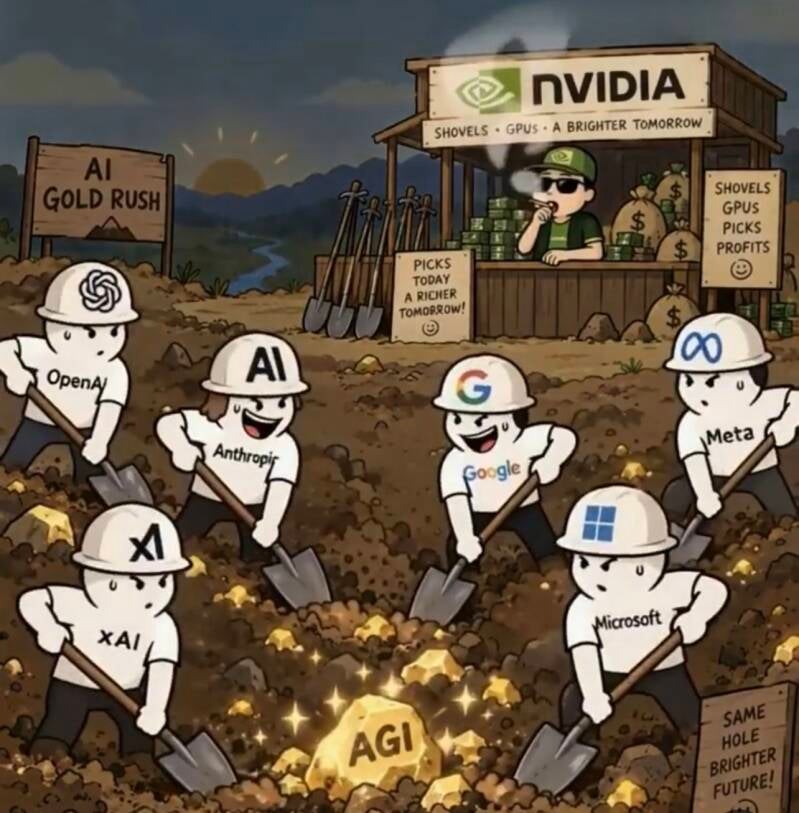
Ready to power your project?
Our mission is to bridge the gap between energy markets and real estate, making it easier to secure capacity and move fast. Let us help you find a power-ready, development-qualified site structured for long-term success.
Add comment
Comments